

Book Club
The Board Perspective — 2026 Oct-Dec
Conflicting Demands on Corporate Governance in Today’s Changing Political Economy
A free online series by Marvin Cheung. Email Marvin@UnbuiltLabs.com to sign up.
Please note, this program is being piloted with a group of Johns Hopkins alumni (though the program is not affiliated to the university or alumni association). If you are a member of the public, you are welcome to send an email to join the waitlist for the 2027 programming.

What do publicly listed corporations owe to the public? What is within an individual board member's power in fulfilling those demands? What are the limitations?
By conceptualizing the board as the nexus that mediates demands from actors (eg. investors, governments, management, and the workforce) and forces (eg. technology, and climate change) — this series asks broader questions about the role of corporations in society today.
Whether you believe in corporations as an entity that is purely for-profit or one that is responsible for a positive social impact, these books will offer a more nuanced understanding of best practices in good governance.
The series includes a careful curation of three books, selected for their balance of analytical rigor and storytelling. They make an enjoyable read for beginners in corporate governance. The series builds on the success on Unbuilt Labs’ work on board leadership, and in particular, our Certificate Board Leadership Program on Quantum and AI which is well reviewed by private and corporate directors.
These books can be read as standalone texts. You are welcome to join just one or any number of the sessions.
Curator’s Notes:
If you are new to the topic of boards, you can read the web article primer "Principles of Corporate Governance" by the Business Roundtable (Harvard Law School Forum on Corporate Governance, 2016). It describes the basic functions and duties of the board.
For corporate governance scholars and experienced board directors looking for a formal treatise of the subject, Hard Lessons in Corporate Governance (Cambridge University Press, 2024) by Bryan C. Tingle (Professor and N. Murray Edwards Chair in Business Law at the University of Calgary) offers a critical review of empirical literature. This can form a theoretical framework to engage with the books below.
22 October, Thursday
Noon-1pm New York / 5-6pm London
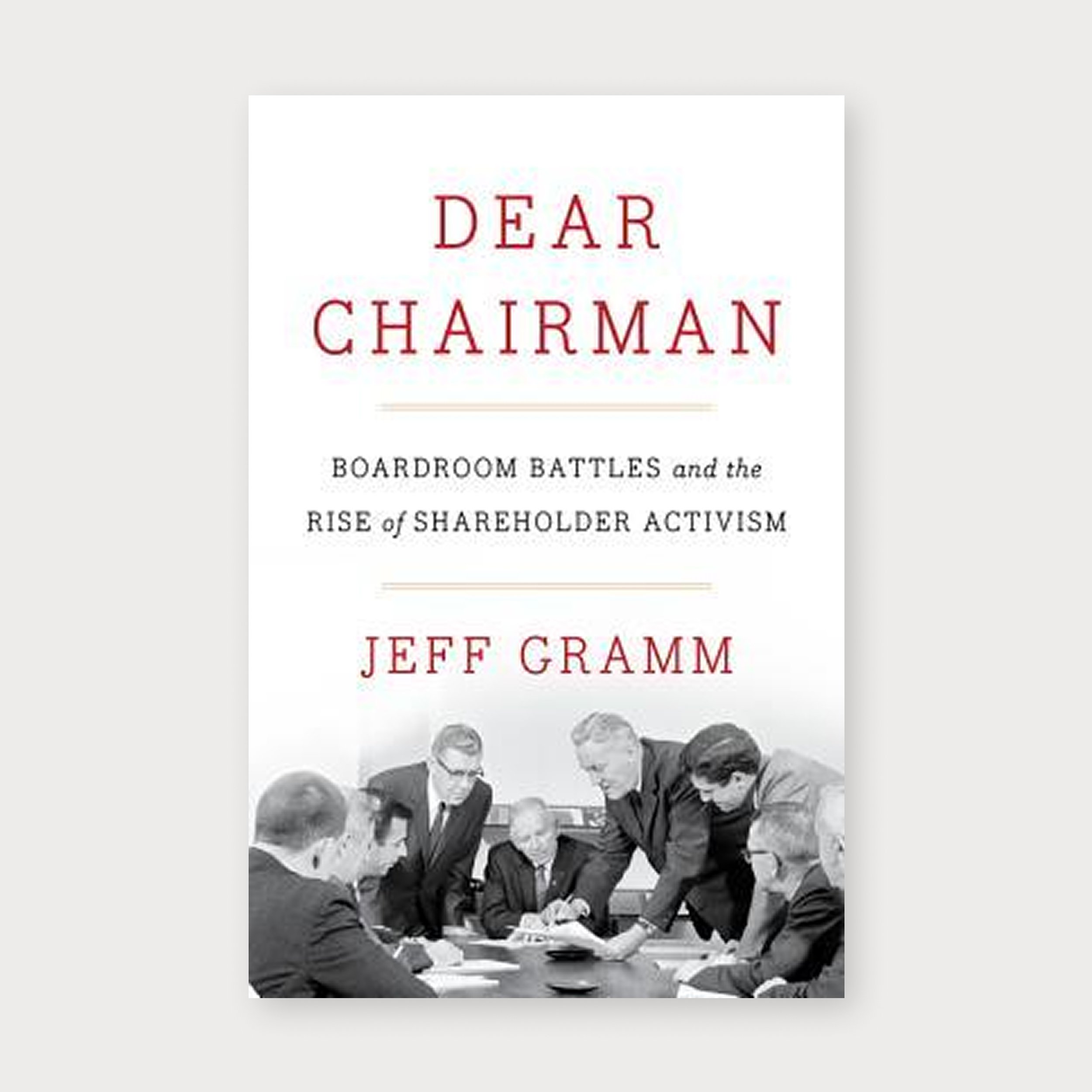
The first book, Dear Chairman: Boardroom Battles and the Rise of Shareholder Activism (Harper Business, 2016), provides participants with a vivid introduction to the boardroom. Through a series of letters, Jeff Gramm (hedge fund manager and Adjunct Associate Professor at Columbia Business School) shines a light on the board-shareholder relationship.
Guiding Questions:
Imagine you have just joined the board of a public company: what relationship might you have with a shareholder activist, what might they ask you to do, and why might you disagree with them?
If the CEO, board members, and major shareholders all have competing views about the company's future, how might an individual director exercise independent judgment? What makes that independence difficult in practice?

19 November, Thursday
11AM-Noon New York / 4-5pm London
The second book, Corporate Power and the Politics of Change (Cambridge University Press, 2026), examines the responses of companies like Google, Nike, Twitter, and Facebook, to the social challenges of today. Matteo Gatti (Professor of Law at Rutgers Law School) discusses the feasibility, legal basis, and critiques of using corporate governance as a mechanism for social change.
Guiding Questions:
If you are on the board of a major public company, when does a social issue become a corporate governance concern rather than a personal or political one?
If a government fails to address an important social problem and your company has the ability to act, should you as a board member support the company stepping in? What might you consider before doing so?
December, date tbc
11AM-Noon New York / 4-5pm London
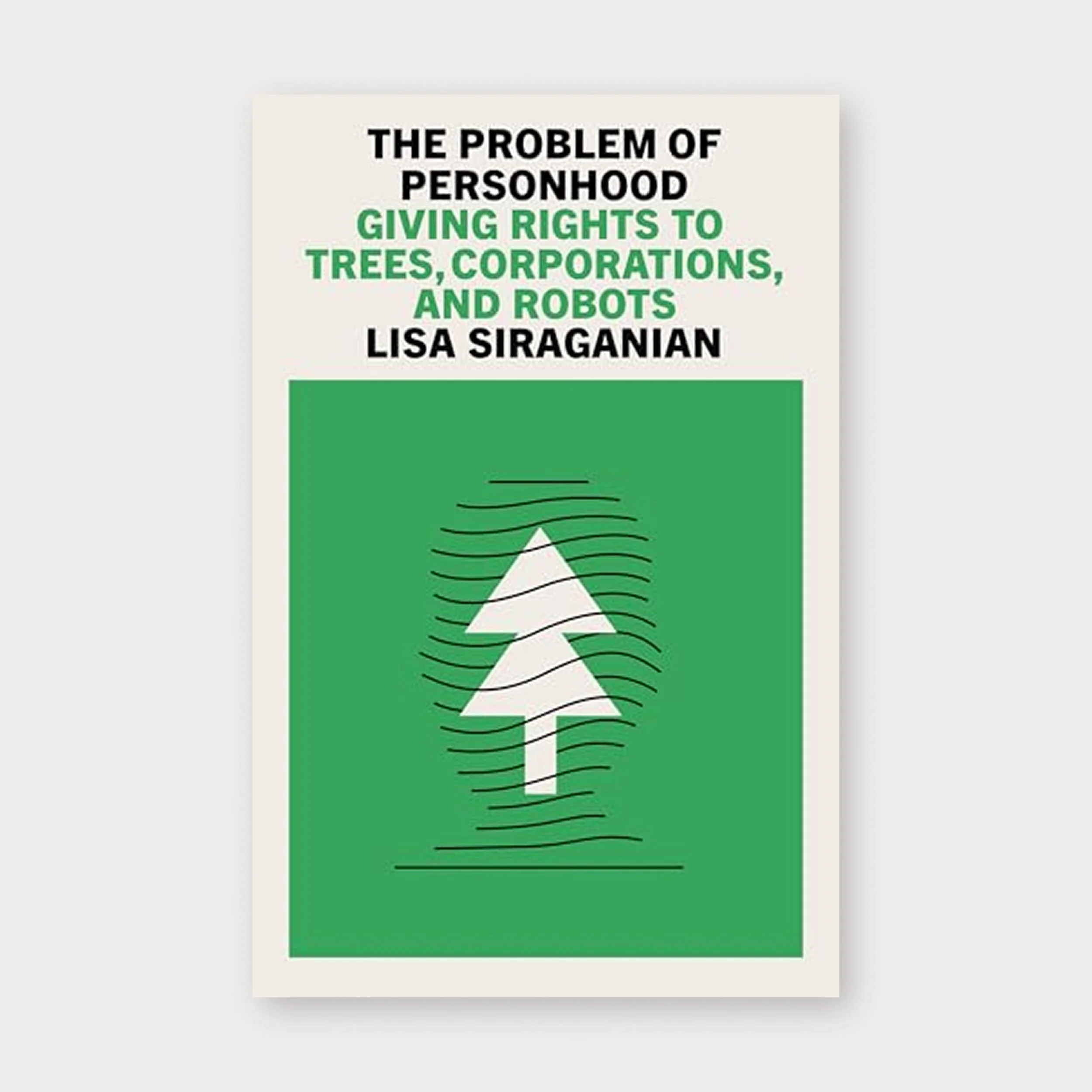
The third book, The Problem of Personhood: Giving Rights to Trees, Corporations, and Robots (Verso, 2026) is by Lisa Siraganian (J. R. Herbert Boone Chair in Humanities and Professor at Johns Hopkins, and Hopkins alum Ph.D. '04). New forms of legal personhood are arising out of corporate personhood. Boards are considering having nature or AI as board members. Siraganian brings a historical-legal perspective to the discussions.
Guiding Questions:
Should AI be granted legal personhood? What are the considerations from the perspective of a corporate board member?
If you are asked to serve on a corporate board and represent the interest of those who cannot speak for themselves, e.g. nature, what would be the basis for determining these entities' interests?